Page 14 - The Waioeka Journey Booklet
P. 14
“The cave is said to be impregnable and of large size – so large that they have plantations at the bottom;
the sides overhang, and they go down by a rope ladder.” F.E. HAMLIN - soldier who led an expedition against Te Kooti - 1870
TE KOOTI BATTLE IN THE Nineteen whakarau (Te Kooti supporters) e Kooti supporters) they burnt Maraetahi Pa. Hira Te Popo
TE KOOTI
TE KOOTI
Nineteen whakarau (T
were caught and executed in the riverbed.
Te Kooti, founder of the Ringatue Kooti, founder of the Ringatu
T WAIOEKA were caught and executed in the riverbed. also escaped.
Por
There are many stories of Te Kooti’s
Porter was told that there were 67 men ter was told that there were 67 men
Porter was told that there were 67 men
SETTLEMENT
SETTLEMENT
SETTLEMENT
Church, was one of the great Maori SETTLEMENT For some years, Te Kooti was in in the pa at the time, the main body of escape. One suggests that Te Kooti was
in the pa at the time, the main body of
leaders, prophets and military AT MARAETAHI people were in fact higher up the river at hidden in a great cave at the head of
A A
people were in fact higher up the river at
AT MARAETAHIT MARAETAHIT MARAETAHI
confl ict with the Crown over land
tacticians of the 19th century. He confl ict with the Crown over land Raipawa Pa. the Waioeka.
disputes and injustices, often resulting
disputes and injustices, often resulting
had many confrontations with The village was built upstr in bloodshed. These confl icts led
The village was built upstr
The village was built upstream on the eam eam on the on the
Crown troops during the late 1860s, river fl at at the foot of the old pa on the to several expeditions being ESCAPE UP RIVER Te Kooti remained for some time in
river fl
river fl at at the foot of the old pa on the at at the foot of the old pa on the at at the foot of the old pa on the
river fl
travelling long distances across much western bank. It consisted of 16 houses, n bank. It consisted of 16 houses, mounted against him. the upper reaches of the Waioeka until
wester
western bank. It consisted of 16 houses,
of the central and eastern parts of the with several others scatter After the attack, those that could, escaped he mounted an attack on Uawa (Tolaga
with several others scattered a little ed a little
with several others scattered a little
After the attack, those that could, escaped
North Island. higher up. When T In March 1870 Major Ropata in different directions – including Te Bay) in July. He eventually returned to
higher up. When Te Kooti left in 1869 e Kooti left in 1869
higher up. When Te Kooti left in 1869
Wahawaha, who with Colonel
some of his people remained to plant emained to plant
some of his people r
some of his people remained to plant Kooti, with four of his wives and a group the Waioeka. However in January 1871
Kooti, with four of his wives and a group
Te Kooti moved to this area in 1869 gardens. He vowed to return. A large dens. He vowed to return. A large Porter was leading one such of approximately 20. A uniform when Ropata and Porter fi nally found his
of approximately 20. A uniform
gar
gardens. He vowed to return. A large
expedition, encountered Te
and left later the same year. At the house was built, a whar Kooti’s guard near Maraetahi said to be his, was found settlement at Te Wera (his place
house was built, a whare karakia,
house was built, a whare karakia,e karakia,
time there was a substantial village or praying house, during his absence. Pa, upstream from here. in the bush by his of sanctuary after Maraetahi), no one
or praying house, during his absence.
near here at Maraetahi. pursuers after was there.
pursuers after
In February 1870 the Crown offered
a £5000 reward for the capture of
Te Kooti. A major campaign was
mounted and he eventually withdrew
up the Waioeka, re-establishing
himself here.
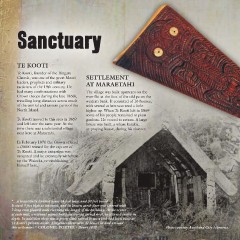
“…a beautifully fi nished house 84 foot long, and 30 foot broad.
It stood 9 feet high at the eaves, and its beaten earth fl oor was covered with
2 long cross plaited mats running the length of the building. At the centre
of each mat, scriptural names had been worked in red wool, in letters 6 inches in
depth. In addition there was a pretty little carved house which had been built as
Te Kooti’s private abode. Altogether there were 42 houses in and around
this settlement.” COLONEL PORTER - Diary 1870 Photo courtesy Auckland City Libraries.
the sides overhang, and they go down by a rope ladder.” F.E. HAMLIN - soldier who led an expedition against Te Kooti - 1870
TE KOOTI BATTLE IN THE Nineteen whakarau (Te Kooti supporters) e Kooti supporters) they burnt Maraetahi Pa. Hira Te Popo
TE KOOTI
TE KOOTI
Nineteen whakarau (T
were caught and executed in the riverbed.
Te Kooti, founder of the Ringatue Kooti, founder of the Ringatu
T WAIOEKA were caught and executed in the riverbed. also escaped.
Por
There are many stories of Te Kooti’s
Porter was told that there were 67 men ter was told that there were 67 men
Porter was told that there were 67 men
SETTLEMENT
SETTLEMENT
SETTLEMENT
Church, was one of the great Maori SETTLEMENT For some years, Te Kooti was in in the pa at the time, the main body of escape. One suggests that Te Kooti was
in the pa at the time, the main body of
leaders, prophets and military AT MARAETAHI people were in fact higher up the river at hidden in a great cave at the head of
A A
people were in fact higher up the river at
AT MARAETAHIT MARAETAHIT MARAETAHI
confl ict with the Crown over land
tacticians of the 19th century. He confl ict with the Crown over land Raipawa Pa. the Waioeka.
disputes and injustices, often resulting
disputes and injustices, often resulting
had many confrontations with The village was built upstr in bloodshed. These confl icts led
The village was built upstr
The village was built upstream on the eam eam on the on the
Crown troops during the late 1860s, river fl at at the foot of the old pa on the to several expeditions being ESCAPE UP RIVER Te Kooti remained for some time in
river fl
river fl at at the foot of the old pa on the at at the foot of the old pa on the at at the foot of the old pa on the
river fl
travelling long distances across much western bank. It consisted of 16 houses, n bank. It consisted of 16 houses, mounted against him. the upper reaches of the Waioeka until
wester
western bank. It consisted of 16 houses,
of the central and eastern parts of the with several others scatter After the attack, those that could, escaped he mounted an attack on Uawa (Tolaga
with several others scattered a little ed a little
with several others scattered a little
After the attack, those that could, escaped
North Island. higher up. When T In March 1870 Major Ropata in different directions – including Te Bay) in July. He eventually returned to
higher up. When Te Kooti left in 1869 e Kooti left in 1869
higher up. When Te Kooti left in 1869
Wahawaha, who with Colonel
some of his people remained to plant emained to plant
some of his people r
some of his people remained to plant Kooti, with four of his wives and a group the Waioeka. However in January 1871
Kooti, with four of his wives and a group
Te Kooti moved to this area in 1869 gardens. He vowed to return. A large dens. He vowed to return. A large Porter was leading one such of approximately 20. A uniform when Ropata and Porter fi nally found his
of approximately 20. A uniform
gar
gardens. He vowed to return. A large
expedition, encountered Te
and left later the same year. At the house was built, a whar Kooti’s guard near Maraetahi said to be his, was found settlement at Te Wera (his place
house was built, a whare karakia,
house was built, a whare karakia,e karakia,
time there was a substantial village or praying house, during his absence. Pa, upstream from here. in the bush by his of sanctuary after Maraetahi), no one
or praying house, during his absence.
near here at Maraetahi. pursuers after was there.
pursuers after
In February 1870 the Crown offered
a £5000 reward for the capture of
Te Kooti. A major campaign was
mounted and he eventually withdrew
up the Waioeka, re-establishing
himself here.
“…a beautifully fi nished house 84 foot long, and 30 foot broad.
It stood 9 feet high at the eaves, and its beaten earth fl oor was covered with
2 long cross plaited mats running the length of the building. At the centre
of each mat, scriptural names had been worked in red wool, in letters 6 inches in
depth. In addition there was a pretty little carved house which had been built as
Te Kooti’s private abode. Altogether there were 42 houses in and around
this settlement.” COLONEL PORTER - Diary 1870 Photo courtesy Auckland City Libraries.