Page 18 - The Waioeka Journey Booklet
P. 18
Have you ever wondered what becomes of a whitebait when its life isn’t frittered away?
They may be small but whitebait are the most well-known of our native fi sh species.
Waioeka River mouth >
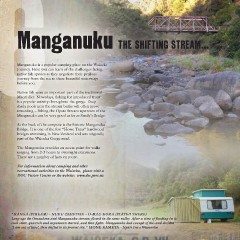
Manganuku is a popular camping place on the Waioeka The Waioeka and all the streams that fl ow in to it represent a large and relatively natural river
Journey. Here you can learn of the challenges facing system. The river fl ows north from its source in the Huiarau Ranges to its outlet on the East
native fi sh species as they negotiate their perilous Coast at Opotiki, providing a home for both native and introduced fi sh species. Native species
include inanga, kokopu and koar
include inanga, kokopu and koar
include inanga, kokopu and koar
include inanga, kokopu and koar
include inanga, kokopu and koar
include inanga, kokopu and koaro. The young of these species are commonly known as whitebait. o. The young of these species are commonly known as whitebait. o. The young of these species are commonly known as whitebait. o. The young of these species are commonly known as whitebait. o. The young of these species are commonly known as whitebait. o
journey from the sea to these beautiful waterways include inanga, kokopu and koaro. The young of these species are commonly known as whitebait.
Other native species include eels, smelt, bullys and tor
before you. Other native species include eels, smelt, bullys and tor
Other native species include eels, smelt, bullys and tor
Other native species include eels, smelt, bullys and torrent fi sh.
Other native species include eels, smelt, bullys and torrent fi sh.rent fi sh.rent fi sh.rent fi sh.
Native fi sh were an important part of the traditional RUNNING THE WATER
Maori diet. Nowadays, fi shing for introduced trout
is a popular activity throughout the gorge. Deep GAUNTLET QUALITY
shady pools near the stream banks will often prove Migrator Good quality water
Migratory fi sh face many challengesy fi sh face many challenges
rewarding – fi shing the Opato Stream upstream of the on their journeys between river and is essential for healthy
on their journeys between river and
Manganuku can be very good as far as Sandy’s Bridge. sea. The fi rst, after living at sea for 4-6 fi sh populations. Forests
sea. The fi rst, after living at sea for 4-6
months, is running the gauntlet of
At the back of the campsite is the historic Manganuku months, is running the gauntlet of bordering the waterways of
whitebaiters’ nets at the mouth of the
Bridge. It is one of the few “Howe Truss” hardwood whitebaiters’ nets at the mouth of the the Waioeka Gorge help provide a
Waioeka River. If they make it past the
healthy environment by reducing erosion,
Waioeka River. If they make it past the
bridges remaining in New Zealand and was originally
nets and don’t become a fritter, there
part of the Waioeka Gorge road. nets and don’t become a fritter, there thus minimising the amount of sediment Koaro >
are further challenges ahead. These
are further challenges ahead. These
entering the waterways. For fi sh, swimming
include pollution from developed land
The Manganuku provides an access point for walks include pollution from developed land in water full of fl oating sediment is like a
as well as man-made structures such as
ranging from 2-3 hours to overnight excursions. as well as man-made structures such as person trying to breathe in a smoke-fi lled
room. When sediment settles on the riverbed
weirs and dams.
There are a number of huts en route. it smothers fi sh and insect burrows.
For information about camping and other
recreational activities in the Waioeka, please visit a
DOC Visitor Centre or the website: www.doc.govt.nz
< Torrent Fish
“MANGA (STREAM) – NUKU (SHIFTED) – O-MAU-KORA (STAYED THERE)
Long ago the Omaukora and Manganuku streams fl owed in the same valley. After a time of fl ooding in to
each other, quarrels and arguments started, and then fi ghts. Manganuku had enough of this and decided
‘I am out of here’, then shifted to its present site.” HONE KAMETA - Ngati Ira o Waioweka Fish photos by Angus McIntosh, Natural Sciences Image Library.
They may be small but whitebait are the most well-known of our native fi sh species.
Waioeka River mouth >
Manganuku is a popular camping place on the Waioeka The Waioeka and all the streams that fl ow in to it represent a large and relatively natural river
Journey. Here you can learn of the challenges facing system. The river fl ows north from its source in the Huiarau Ranges to its outlet on the East
native fi sh species as they negotiate their perilous Coast at Opotiki, providing a home for both native and introduced fi sh species. Native species
include inanga, kokopu and koar
include inanga, kokopu and koar
include inanga, kokopu and koar
include inanga, kokopu and koar
include inanga, kokopu and koar
include inanga, kokopu and koaro. The young of these species are commonly known as whitebait. o. The young of these species are commonly known as whitebait. o. The young of these species are commonly known as whitebait. o. The young of these species are commonly known as whitebait. o. The young of these species are commonly known as whitebait. o
journey from the sea to these beautiful waterways include inanga, kokopu and koaro. The young of these species are commonly known as whitebait.
Other native species include eels, smelt, bullys and tor
before you. Other native species include eels, smelt, bullys and tor
Other native species include eels, smelt, bullys and tor
Other native species include eels, smelt, bullys and torrent fi sh.
Other native species include eels, smelt, bullys and torrent fi sh.rent fi sh.rent fi sh.rent fi sh.
Native fi sh were an important part of the traditional RUNNING THE WATER
Maori diet. Nowadays, fi shing for introduced trout
is a popular activity throughout the gorge. Deep GAUNTLET QUALITY
shady pools near the stream banks will often prove Migrator Good quality water
Migratory fi sh face many challengesy fi sh face many challenges
rewarding – fi shing the Opato Stream upstream of the on their journeys between river and is essential for healthy
on their journeys between river and
Manganuku can be very good as far as Sandy’s Bridge. sea. The fi rst, after living at sea for 4-6 fi sh populations. Forests
sea. The fi rst, after living at sea for 4-6
months, is running the gauntlet of
At the back of the campsite is the historic Manganuku months, is running the gauntlet of bordering the waterways of
whitebaiters’ nets at the mouth of the
Bridge. It is one of the few “Howe Truss” hardwood whitebaiters’ nets at the mouth of the the Waioeka Gorge help provide a
Waioeka River. If they make it past the
healthy environment by reducing erosion,
Waioeka River. If they make it past the
bridges remaining in New Zealand and was originally
nets and don’t become a fritter, there
part of the Waioeka Gorge road. nets and don’t become a fritter, there thus minimising the amount of sediment Koaro >
are further challenges ahead. These
are further challenges ahead. These
entering the waterways. For fi sh, swimming
include pollution from developed land
The Manganuku provides an access point for walks include pollution from developed land in water full of fl oating sediment is like a
as well as man-made structures such as
ranging from 2-3 hours to overnight excursions. as well as man-made structures such as person trying to breathe in a smoke-fi lled
room. When sediment settles on the riverbed
weirs and dams.
There are a number of huts en route. it smothers fi sh and insect burrows.
For information about camping and other
recreational activities in the Waioeka, please visit a
DOC Visitor Centre or the website: www.doc.govt.nz
< Torrent Fish
“MANGA (STREAM) – NUKU (SHIFTED) – O-MAU-KORA (STAYED THERE)
Long ago the Omaukora and Manganuku streams fl owed in the same valley. After a time of fl ooding in to
each other, quarrels and arguments started, and then fi ghts. Manganuku had enough of this and decided
‘I am out of here’, then shifted to its present site.” HONE KAMETA - Ngati Ira o Waioweka Fish photos by Angus McIntosh, Natural Sciences Image Library.